AI meets cheese production: rethinking efficiency
-

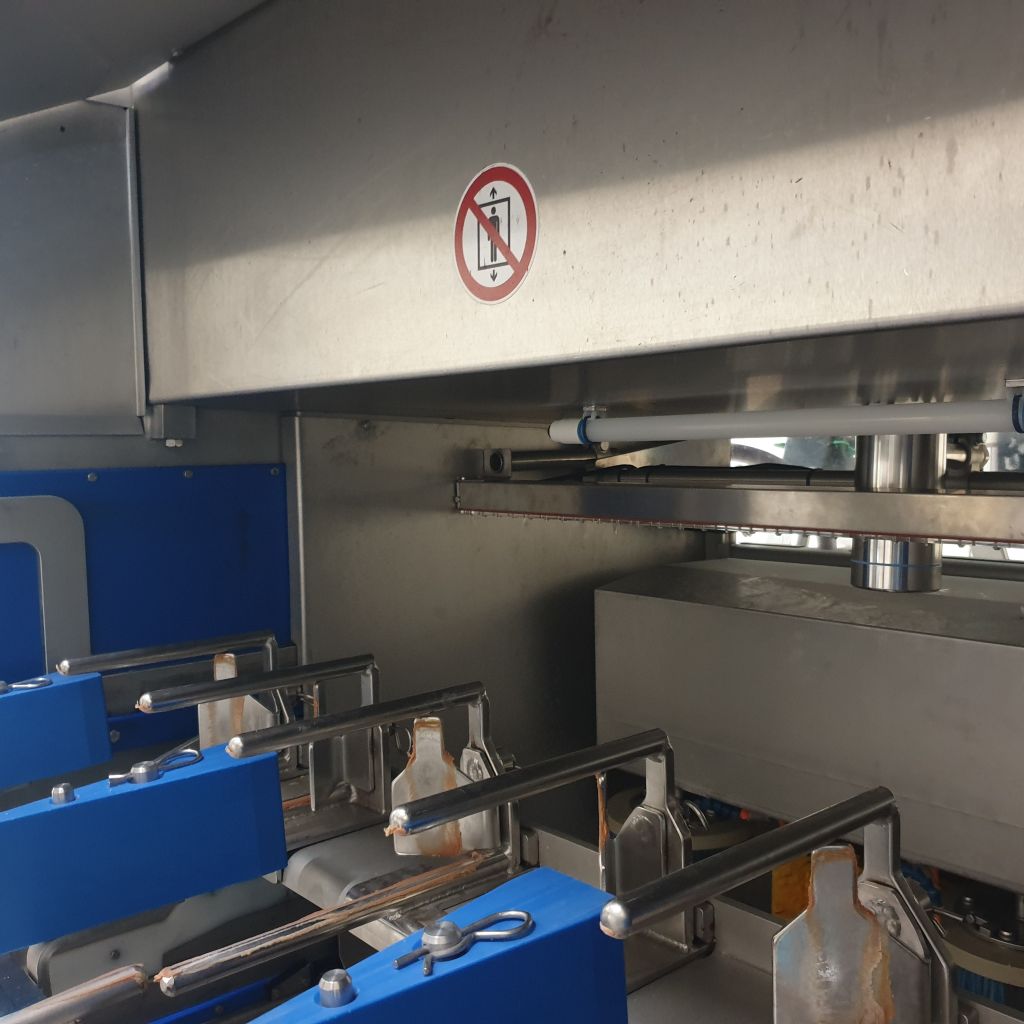
Interior view of the care robot, which can tend to up to three cheese wheels at a time.
-
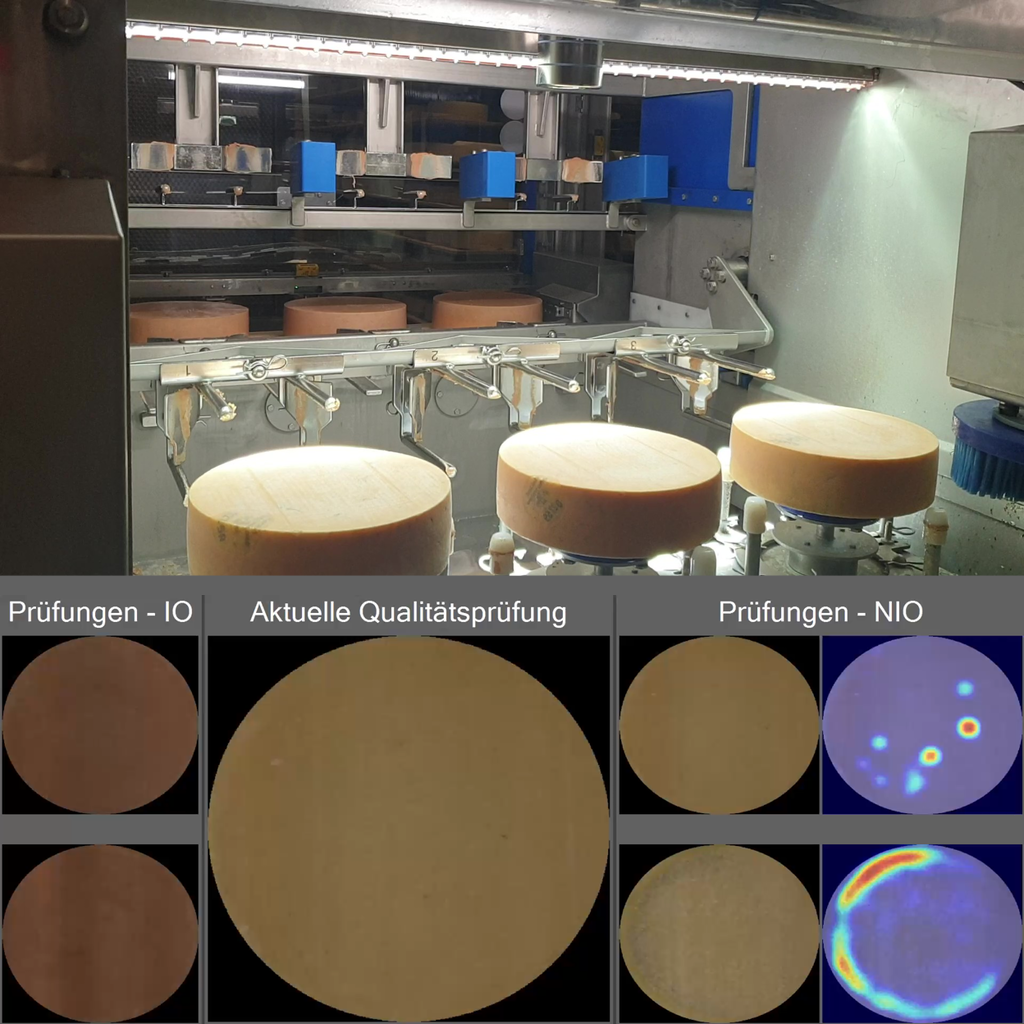
The cameras in the blue housing capture images of the cheese wheels inside the care robot – visualisation of the inspected cheese wheels. Defects are highlighted using a heatmap.
-
The food industry is benefiting significantly from the rapid developments in the field of artificial intelligence (AI). Of particular value to food producers is the combination of AI with machine vision, which enables the automation of entirely new applications and significantly boosts productivity – particularly in quality assurance. One example of such a solution is a fully automated system comprising a mobile maintenance robot and machine vision. This solution reduces the wastage of cheese wheels during the maturing process, improves quality and cuts costs.
Challenges in the cheese industry
Cheese is hugely popular worldwide, which explains the steadily rising demand. This trend is having various effects on cheese producers and presenting them with new challenges. Cheese dairies in Europe, in particular, are feeling the pinch of the skills shortage. At the same time, sustainability is becoming increasingly important. The industry is therefore working to reduce waste in order to conserve resources. Furthermore, consumer expectations regarding quality and variety are rising.
“One solution to these challenges lies in the end-to-end automation of the cheese wheel maturing process,” says Dorian Köpfle, Machine Vision Engineer at Eberle Automatische Systeme GmbH & Co. KG, adding: “Cheese wheels often mature in climate-controlled rooms for up to 14 months. The high storage costs and the desire to minimise waste require regular checks for mould. However, it is impossible for staff to inspect thousands of cheese wheels. We were therefore commissioned by the Gebr. Baldauf GmbH & Co. KG cheese dairy to develop an automated solution.”
Gebr. Baldauf GmbH is a long-established cheese dairy based in the Allgäu region. We specialise in automation solutions for the food industry, robotics and industrial image processing, and collaborated on the development of the solution with Leu-Anlagenbau, a Swiss company that supplied the mobile maintenance robot.
The solution: Automated care and inspection process
Before each care cycle performed by the robot, the cheese wheels are inspected for defects such as mould spores using machine vision. The images captured by the camera are analysed using MVTec HALCON software. The results are stored in a database accessible via a web interface, enabling the customer to identify defective cheese wheels at an early stage and adjust the maintenance process accordingly. At the same time, the mobile robot carries out the maintenance work by brushing the cheese wheels and treating them with maintenance fluids to control rind formation and remove unwanted layers of slime.
A fully automated solution
The aim of the automation was to enable 100% monitoring throughout the entire maturing period of the cheese – something that had previously been impossible with manual monitoring. This reduces waste by detecting quality deviations at an early stage, whilst simultaneously improving product quality through individual care for each cheese wheel. Furthermore, the aim was to standardise quality control, ensure complete traceability and increase efficiency. The system also forms the basis for long-term data analysis and future AI applications.
The solution comprises a care robot equipped with bar lighting and a 4K colour line scan camera. A compact industrial PC is used as the hardware, whilst a central computer at the customer’s site handles the deep learning-based classification. The MVTec HALCON software for industrial image processing is used in conjunction with our own ‘Storage’ software to monitor and document the care process.
AI and Deep Learning in Practice
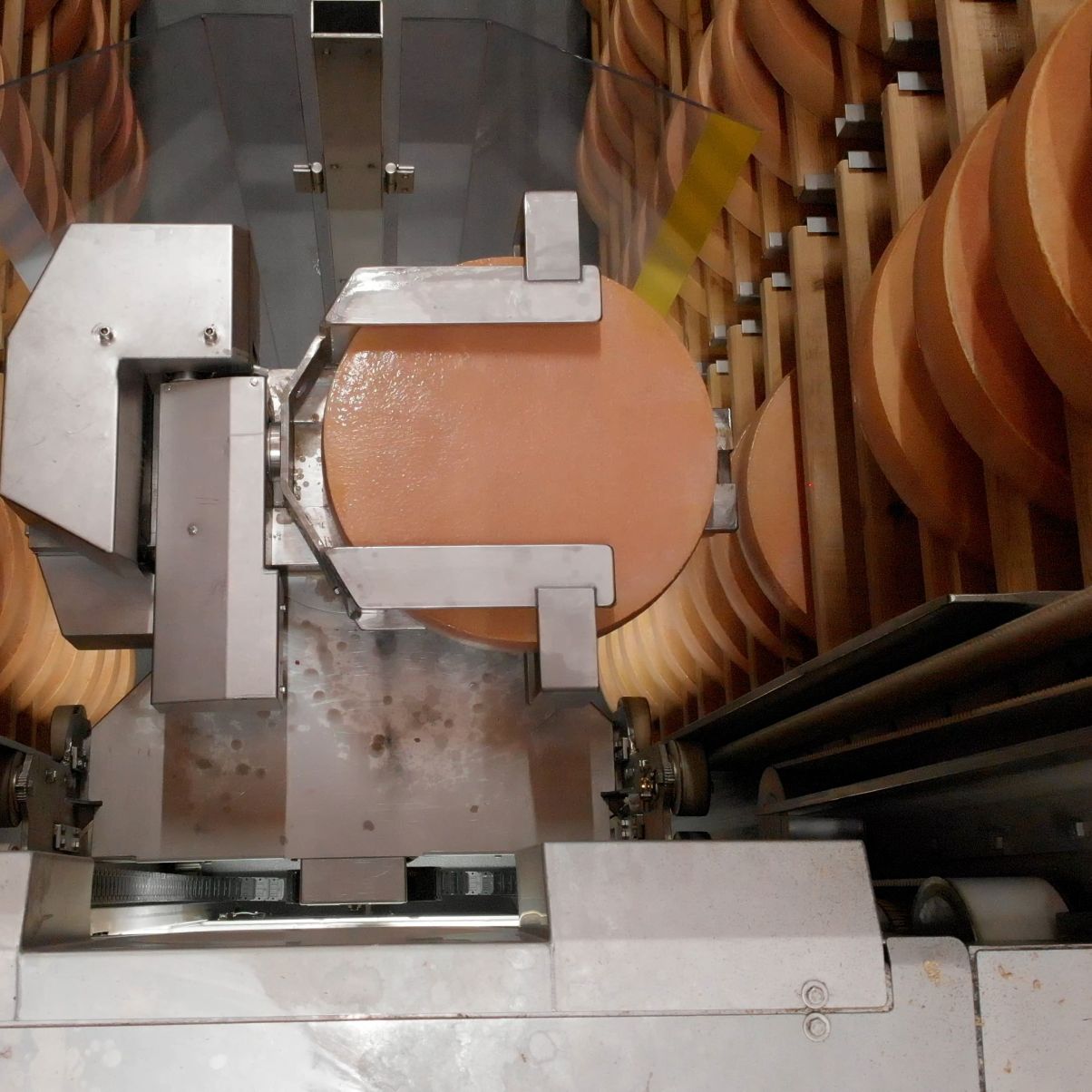
The maintenance and inspection process works as follows: the mobile robot moves through the cheese cellar and handles the cheese wheels in groups of three, each resting on a board. An image is captured for each set. After pre-processing, the image is sent to the customer’s central computer, where it is classified using deep learning. In addition, the position data of the cheese wheels is transmitted to determine the type of cheese and a unique cheese ID. This data, along with the analysis, is accessible to the customer via the warehouse management system.
Overcoming technical challenges
Developing the solution was technically challenging, particularly due to the variety of cheese types and stages of maturity, which look different in practice and change significantly during the maturing process. Traditional image processing methods reached their limits here. MVTec HALCON relied on AI to reliably detect anomalies using deep learning.
Felix Podhorsky, Business Development Manager at MVTec, explains: “HALCON is able to reliably detect anomalies of any kind by combining various image processing methods. First, the relevant areas of the image are identified before classification and analysis take place.” And Christoph Muxel, responsible for customer relations at Eberle, adds: “We have been working with MVTec for several years now, as we are impressed by the wide range of functions and performance of MVTec’s products, as well as their ease of use, even with a wide variety of cameras.”
The foundation for end-to-end automation
In addition to image processing, enabling fully automated inspection presented a challenge. Due to the variety of cheese types and degrees of maturity, it was necessary to develop a training model that took these differences into account. This allows the customer to classify the images via the warehouse management system, but Eberle is aiming for fully automated inspection.
Goals achieved and foundations laid for further digitalisation steps
The system, which has been in operation since December 2024, has exceeded expectations. “Our cheese quality control is a flagship project for digitalisation and automation in the food industry. The customer has been able to reduce costs, improve quality assurance and lay the foundations for further smart processes,” says Dorian Köpfle.
Automation has reduced the amount of manual work required whilst increasing the frequency of inspections. This has led to a reduction in product waste, as defects such as cracks or mould were detected at an early stage and corrective action taken.
The system enabled comprehensive digital documentation, automated quality checks and end-to-end traceability. In the long term, in-depth data analysis will help to further optimise the maturing process. Furthermore, the system is ready for integration into digital platforms such as ERP or cloud systems and can be scaled to accommodate different types of cheese.
In light of the success of this pilot project, Eberle plans to further develop the system as a standardised solution for the entire cheese industry. “We would like to integrate the camera system into mobile care robots and stationary care systems worldwide. The project in the Allgäu region demonstrates how machine vision can contribute to enhancing quality, efficiency and competitiveness in cheese production,” explains Christoph Muxel.