FTL
Automates Transport • Regulates Access • Optimizes Processes
Eberle’s driverless transport solution – FTL controls autonomous transport robots and thus automates transport tasks in intralogistics. FTL enables automatic communication between transport robots, building infrastructure, manufacturing facilities such as machinery and equipment, and enterprise resource planning (ERP).
FTL increases the range of driverless transport robots. Through dynamic transport orders, FTL controls the optimal utilization of the entire fleet. As a control program, the FTL management system guarantees a secure and stable flow in the transport chain and automatically controls transport jobs, processing and access authorizations of the robots in individual areas.
FTL - Driverless Transport Solution
Autonomous Driverless Transport Systems
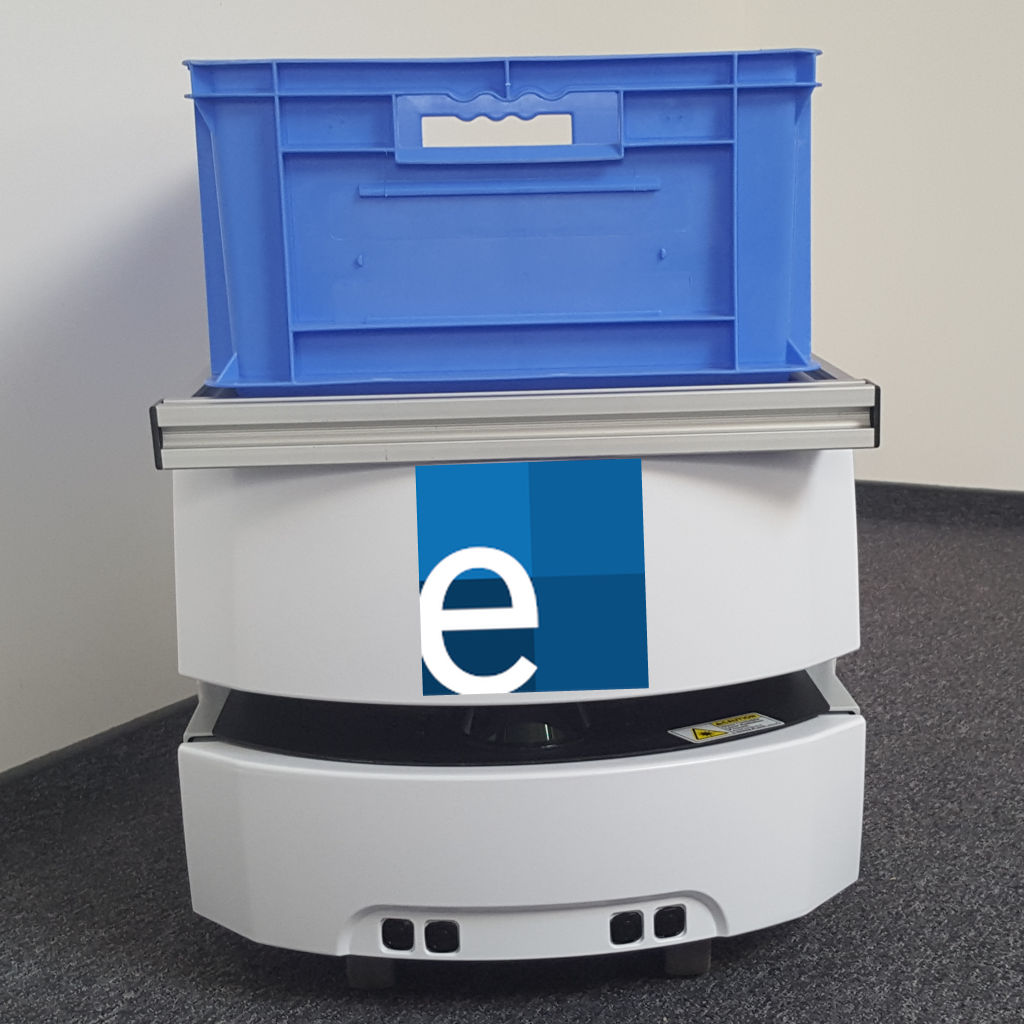
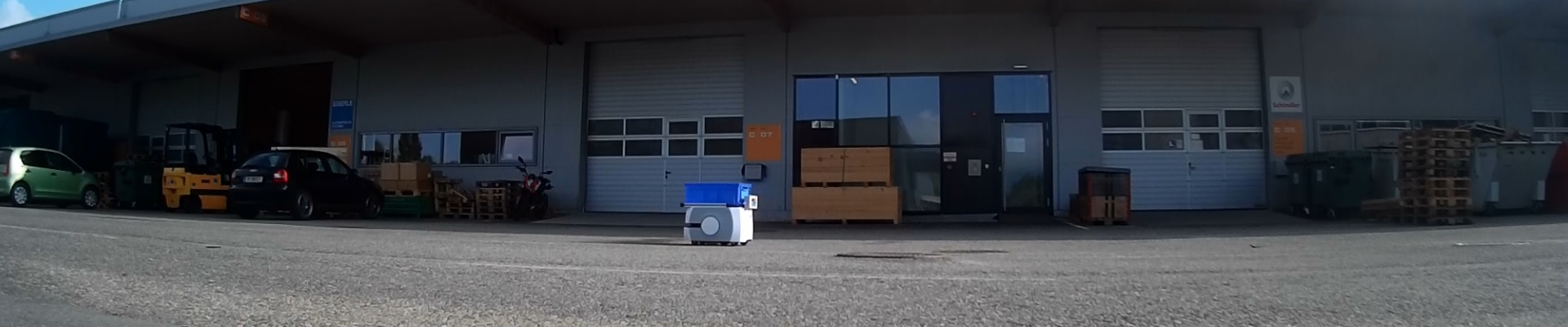
Autonomously navigating transport robots form the basis of every FTL solution. These are able to independently orient themselves based on surrounding structures and detect obstacles in the way via the integrated sensors. The transport robots independently calculate their position and automatically plan a route to the destination. They relieve employees and make intralogistics efficient and highly available.
FTL Clears the Way
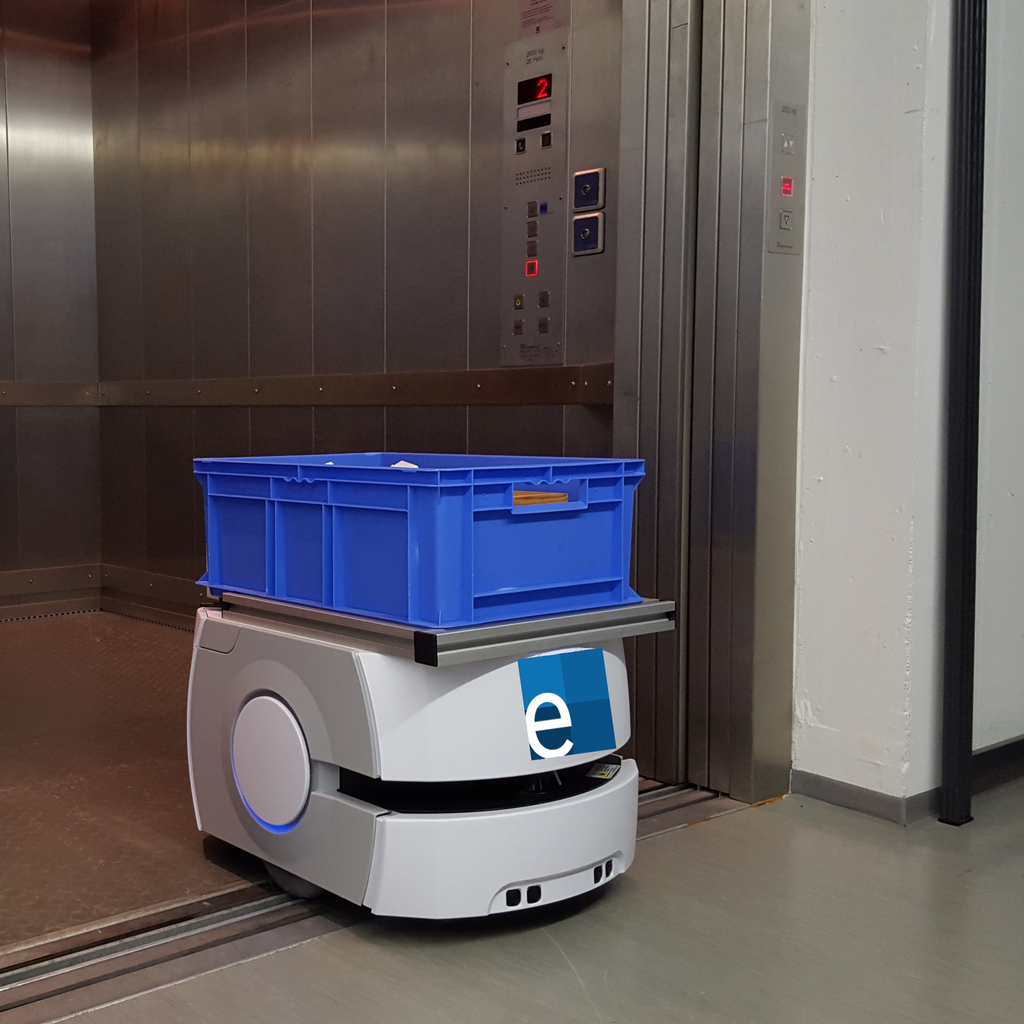
Although autonomous transport robots navigate independently, their standard versions cannot overcome any structural obstacles like locks, doors, gates or elevators. For communication between the robot and such barriers, a higher-level management system is needed, which, for example, opens doors and controls access.
Eberle’s driverless transport solution – FTL establishes communication between the transport robot and construction barriers. FTL thus increases the range of transport robots across passage ways, entrances and floors.
Automated Material Flow
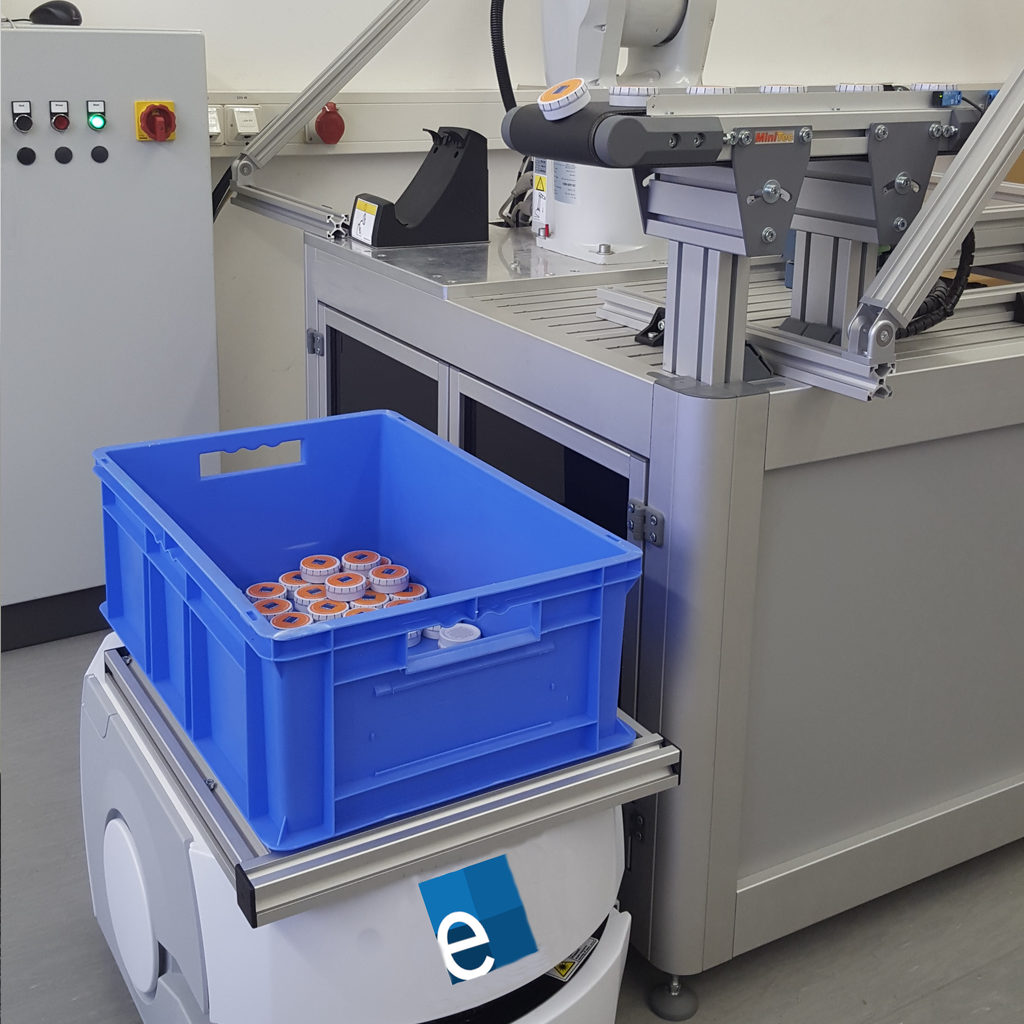
During loading and unloading of machines, FTL provides the interface for automated chaining of material flow controls. When reaching a batch size, for example, the machine transmits an order to the FTL system to remove the goods. The system checks which transport robot from the fleet is available in close proximity and forwards the pick-up order to it.
FTL ensures smooth transport, avoids congestion and guarantees continuous availability of material on the machine. As a result, FTL increases the degree of autonomy of plants. The integrated and automatic data recording makes transport processes transparent and comprehensible.
control – Requesting Robots on a Mobile Basis
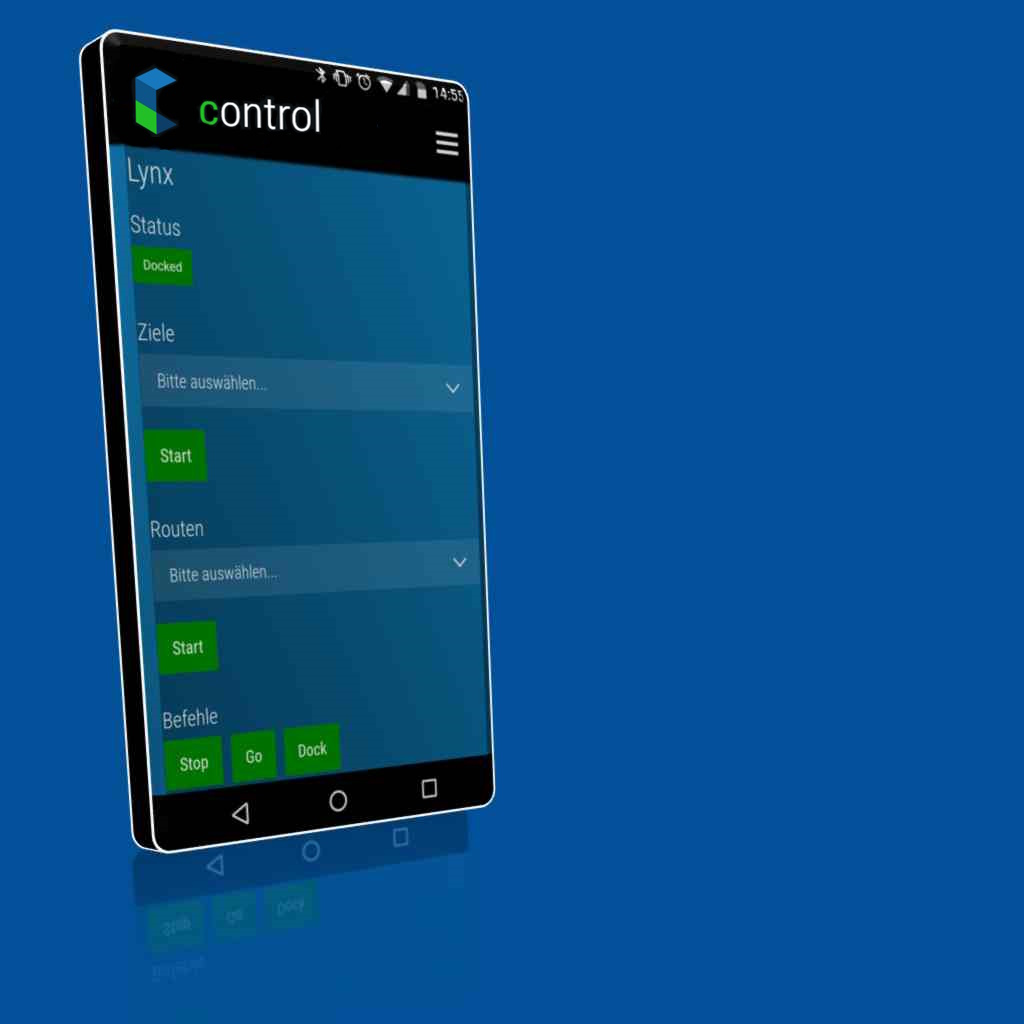
Combined with the Control, FTL offers the possibility to request a transport robot via mobile devices to manual workstations or in case of sporadically needed transports. For example, an employee may use the web application control on a mobile phone to specify the pick-up position and route. FTL receives the transport order and organizes the removal.
FTL makes transport robots flexible and guarantees optimized material flow at the workplace. Automated delivery and removal relieve the employees and create resources for the staff’s core tasks.
Vertical Integration for FTL
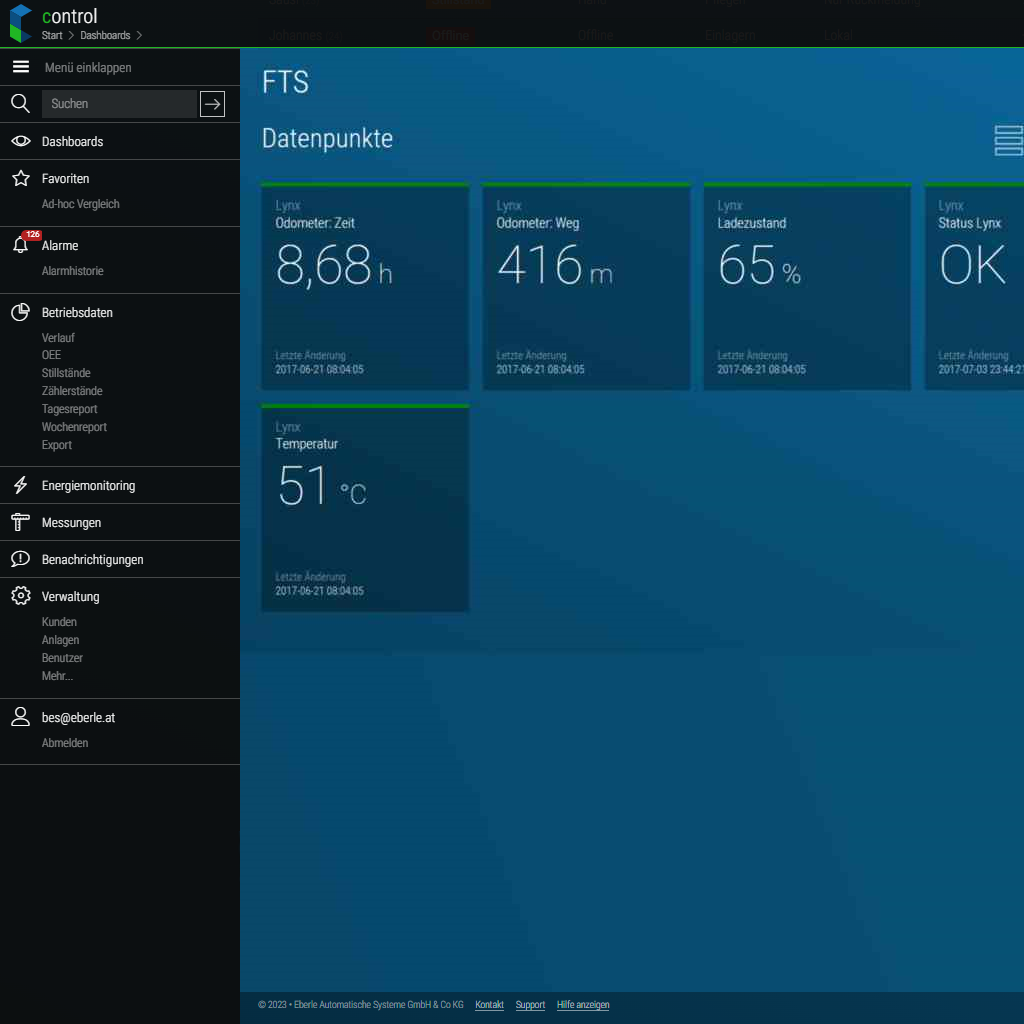
The IoT platform control links the FTL automated guided vehicle (AGV) system with the enterprise resource planning (ERP) system. On the one hand, control acts as a data interface between the ERP and the FTL; on the other hand, it also allows for the manual entry of transport orders. control retrieves operational robot data from the FTL and stores it continuously and consistently for production data acquisition. Information on transport orders, status, maintenance details, etc. is available at any time across the entire company via the control web application.
control and FTL automate intralogistics from the very top of the organisation. Transport tasks thus become consistently transparent and can, for example, be linked directly to order processing. Transport processes within intralogistics can be traced at any time.
Demo Video
FTL, FTS and control in practical application. FTL manages the automatic transport of materials, as well as navigation across multiple floors and the outdoor depot.